$20.00
We will hold your cart for 15:00.
Microfiber is everywhere: in your kitchen, your garage, your cleaning caddy. But for all its popularity, it's also one of the most misunderstood cleaning tools. Walk down any cleaning aisle, and you'll hear a dozen conflicting opinions: “Just toss it in the wash with your jeans,” “Fabric softener is fine,” “All microfiber is created equal.”
As a supplier that outfits professional cleaning crews and detailers, we've seen the damage these myths cause daily: streaked windows, scratched paint, and towels that turn into greasy bricks. So let's set the record straight. We're debunking the seven most common microfiber myths and giving you the pro-grade habits that actually work.
The reality: Walk into any big-box store and you'll find “microfiber” towels for a dollar each. What you're actually buying is often a low-grade polyester blend with a loose weave and rough edges. Professional microfiber is engineered: split fibers, specific GSM (grams per square meter), and different blends for different jobs.
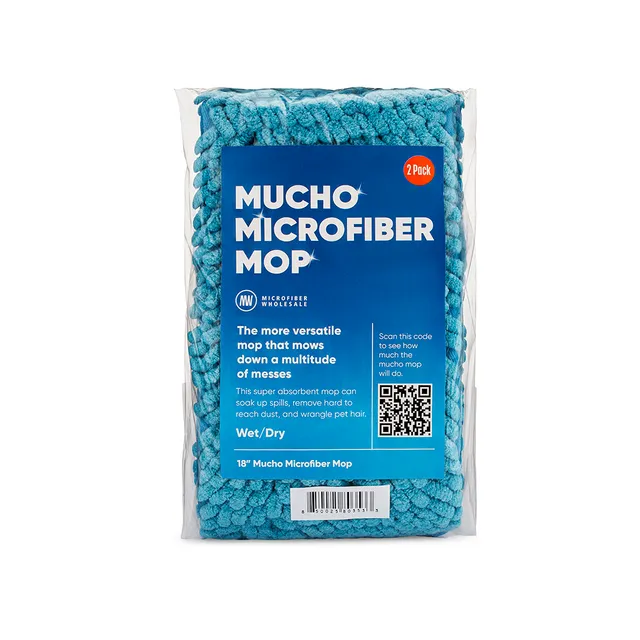
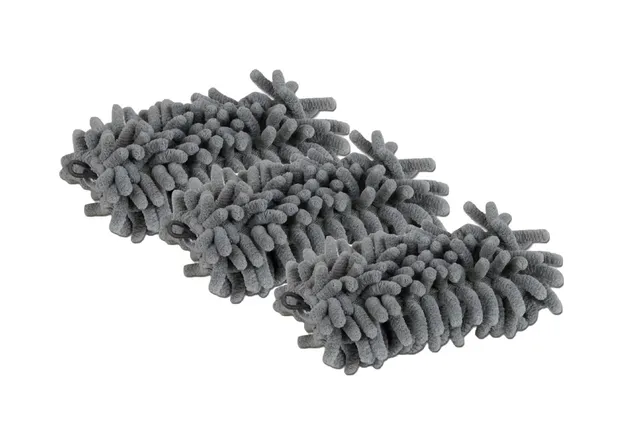
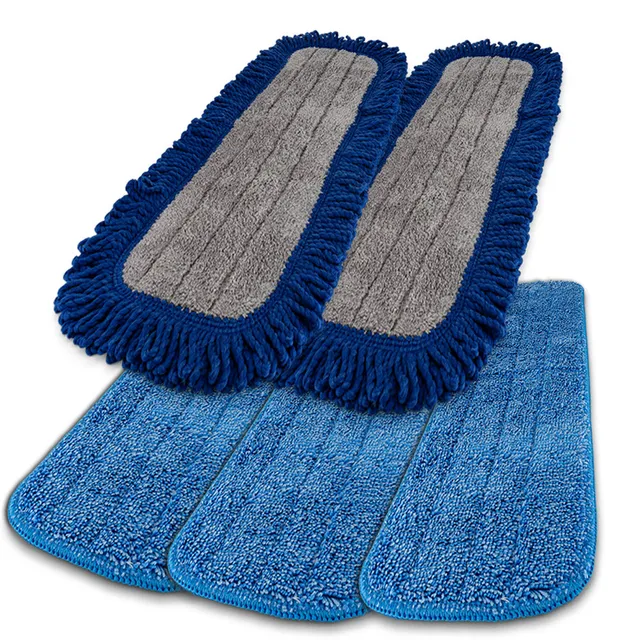
Using the wrong towel is like using a sandpaper on your car's paint. For example, a chenille mop pad is designed to trap grime in its deep loops, perfect for tile and grout, while a flat-weave wipe is better for surfaces like glass and stainless steel. Know your GSM and your weave – your surfaces will thank you.
The reality: Microfiber is a high-maintenance friend. Washing it with cotton (lint), heavy-duty detergents (residue), or fabric softener (clogged fibers) destroys its ability to absorb and trap dirt. One wash with fabric softener and your towel's electrostatic charge is gone for good.
How to do it right: Separate your microfiber from everything else. Use a liquid detergent that's free of dyes and fragrances – or better, a dedicated microfiber wash. And always air dry or tumble on low. High heat permanently melts the fibers into a stiff, useless mess.
The reality: This is the single fastest way to ruin your towels. Fabric softener coats the fibers with a waxy film, filling the microscopic splits that make microfiber work. The result? A towel that pushes water and grease around instead of absorbing it. If you've ever wondered why your “microfiber” stopped absorbing, this is why.
Not sure if your towels are already damaged? Do the water test: drop water on the towel. If it beads up and rolls off, the fibers are coated. If it soaks in instantly, you're good. To revive a damaged towel, wash it with white vinegar (no detergent) – vinegar breaks down the waxy residue.
The reality: Professional cleaners use more towels, not fewer. They know that cross-contamination is a silent enemy. Using the same towel on your kitchen counter and then the bathroom sink is a fast track to spreading bacteria.
For an efficient home or business routine, follow the “three-towel rule”: one for wet or heavy soils, one for cleaning with a solution, and one for drying/polishing. And don't wait – swap out a towel the moment it's saturated.
The reality: Even many liquid detergents contain optical brighteners, fragrances, and enzymes that leave residues. These don't come out easily and gradually degrade your microfiber's ability to grab onto dirt. That's why professional cleaning suppliers offer special microfiber detergents – they're formulated to cut grease without coating the fibers.
In a pinch, use a small amount of a free-and-clear dish soap (like Dawn) for microfiber used on grease, but for washable microfiber mop pads and cloths, switch to a detergent specifically marked as microfiber-safe.
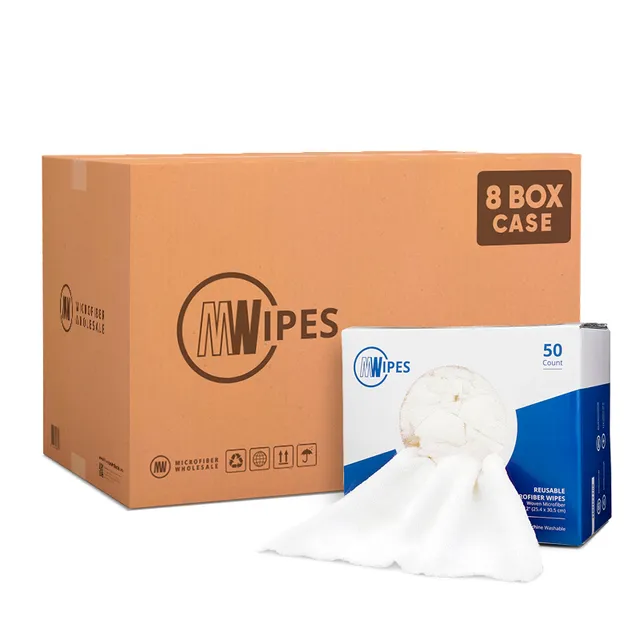
The reality: On the contrary, professional detailers rely on microfiber precisely because it's gentler than cotton and safer than paper towels. The key is using the right microfiber. A high-GSM, plush towel – like those from MWipes – is safe for clear coat, while a smooth, low-lint towel is ideal for touchscreens and eyeglasses.
To keep your screens and car surfaces safe, never use a used towel or one that's been washed with fabric softener. The rough fibers can scratch. Dedicate specific towels to delicate jobs and label them so they're not mistaken for dirty rags.
The reality: GSM (grams per square meter) tells you about density and thickness, not quality. A 500 GSM towel is great for buffing paint, but it's too thick for cleaning windows. A 300 GSM towel is the sweet spot for general-purpose: thick enough to hold liquid, thin enough to dry quickly. For dusting, a lower GSM towel with an open weave works best.
Instead of blindly buying the highest GSM, think about your task. If you're detailing a car, go with 350-400 GSM. For glass, 250-300 GSM. For dusting, 200-250 GSM. Invest in a range of towels and you'll always have the right tool.
Microfiber is not just a cleaning rag; it's a performance fabric engineered to make your life easier. But only if you treat it right. Ditch the fabric softener, pick the right GSM, and wash your towels separately. Your windows, your paint, and your floors will show the difference.
Looking to upgrade your toolkit? VantaClean carries professional-grade microfiber supplies from Microfiber Wholesale – from bulk towels to mop systems – so you can clean like a pro, whether you're running a business or just tackling your weekend to-do list.
Orders over $45.00 ship free. Otherwise, shipping is $8.00.
Hassle-free returns
SSL encrypted checkout
100% genuine products
Explore pro-grade cleaners, squeegees, and surface protection. Buy with confidence and save 15% with code CLEAN15.
Email: support@vantaclean.shop
Address: 4789 Oakridge Avenue, Unit 12, Denver, CO 80202, United States